Introduction to Renter Fire Safety
Apartment living offers convenience and community, but sharing walls with multiple neighbors introduces distinct fire-safety considerations. While landlords hold responsibility for the structural integrity of a building and the maintenance of shared systems, renters manage the day-to-day conditions inside their living spaces. Taking twenty minutes to complete a thorough safety review helps mitigate common domestic hazards without requiring permanent alterations or costly upgrades.
Because renters must respect lease terms and avoid damaging property, safety measures must rely on non-permanent solutions and daily habits. Developing a routine check ensures that life-saving equipment remains functional and potential ignition sources are properly managed. This guide breaks down the essential steps every renter can take to secure their apartment, focusing on practical actions that fit within standard lease agreements.
Inspect Smoke and Carbon Monoxide Alarms
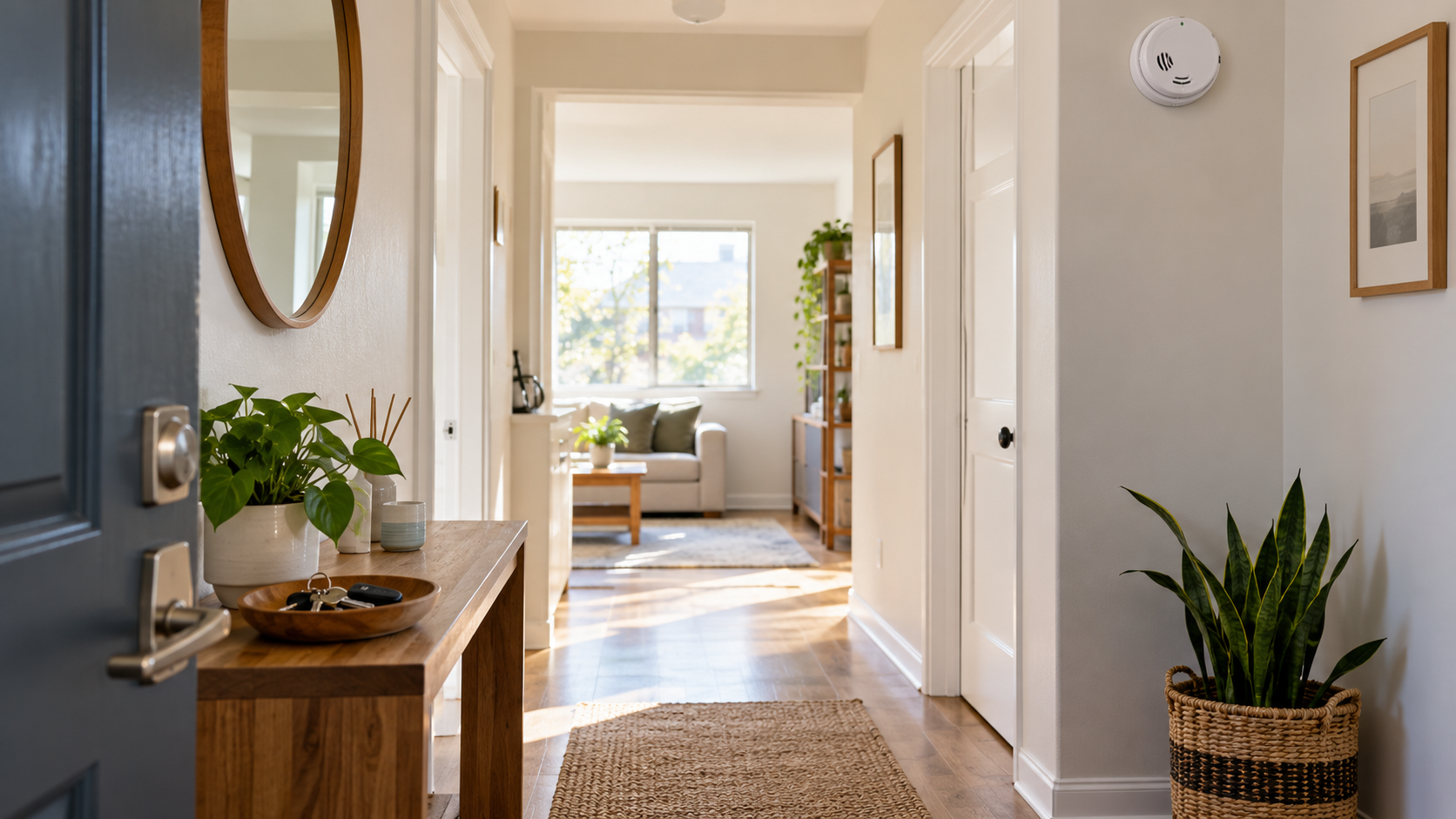
Working alarms provide the earliest possible warning during a fire emergency, giving residents critical seconds to escape. Begin your walkthrough by locating every smoke detector and carbon monoxide detector in the apartment. Press the test button on each unit until the alarm sounds. If the unit fails to beep, the batteries likely need replacement, or the device has reached the end of its operational lifespan.
Notify your landlord immediately if an alarm is missing, broken, or continuously chirping despite fresh batteries. Federal guidelines and local housing codes generally require landlords to provide functioning smoke detectors, but tenants often hold responsibility for reporting malfunctions or swapping standard batteries. Never remove batteries from an alarm to stop nuisance activations from cooking; instead, use a temporary fan or open a window during meal preparation.
Clear Exits and Windows
In an emergency, every second counts, and blocked pathways can trap you inside your home. Inspect all primary exit doors and secondary egress routes, such as bedroom windows and balcony doors, to ensure they remain completely unobstructed. Move heavy furniture, storage boxes, or decorative items that might impede your ability to open a door or window quickly.
Test every window and door along your escape routes to confirm they open smoothly. Painted-shut windows or rusted sliding door tracks can prevent escape during a fire. If you live on an upper floor, check that window security bars feature quick-release mechanisms that do not require specialized tools or keys. Keep emergency ladders, if stored in the apartment, in an easily accessible location rather than tucked away in the back of a deep storage closet.
Evaluate Electrical Cord Safety and Outlets
Overloaded electrical outlets and damaged cords rank among the leading causes of residential electrical fires. Walk through each room and inspect the condition of all visible power cords, extension cords, and power strips. Discard any cords that show frayed insulation, exposed wires, or bent prongs. Avoid running extension cords underneath area rugs or carpets, as this traps heat and can ignite the surrounding fabric.
Check wall outlets for signs of damage, such as discoloration, scorch marks, or loose fittings where plugs easily slip out. Avoid daisy-chaining multiple power strips or plugging high-wattage heating appliances into standard multi-plug adapters. State that the renter should check their lease and surface/manufacturer instructions before adhesives or heavy loads when mounting power strips or cord management channels to walls or baseboards.
- Inspect power cords for fraying or exposed copper wire
- Keep extension cords entirely uncovered and off the floor
- Report discolored or sparking electrical outlets to management
Manage Kitchen Heat Sources
The kitchen serves as the primary origin point for many domestic fires, making it a crucial zone for safety checks. Inspect the stovetop and surrounding counter space to ensure that flammable items—such as paper towels, dish towels, plastic bags, and wooden utensils—stay safely away from burners. Grease buildup on stove grates and inside the oven also poses a significant risk, so maintain a regular cleaning schedule to remove food residue.
Never leave cooking food unattended, especially when using high heat, frying, or boiling liquids. If you must leave the kitchen, turn off the burner until you return. Keep a proper pan lid or a baking sheet nearby to smother small grease fires instantly. Never attempt to extinguish a grease fire with water, as water causes burning oil to splatter and spread rapidly.
Review Candle and Heating Habits
Open flames and portable heating devices require strict safety boundaries inside rented spaces. If you use candles, keep them away from drafts, curtains, blankets, and high-traffic areas where they might get knocked over. Always extinguish candles completely before leaving the room or going to sleep. Whenever possible, swap traditional candles for battery-operated flameless alternatives to eliminate the open flame hazard entirely.
Portable space heaters demand careful placement to prevent localized fires. Position space heaters on a flat, level, hard surface rather than on carpets, rugs, or bedding. Maintain a safe clearance zone of at least three feet around the unit, keeping it away from upholstered furniture, clothing, and papers. Always plug space heaters directly into a wall outlet rather than an extension cord, and turn them off whenever you leave the room or head to bed.
Establish a Personal Fire Escape Plan
Physical safety equipment means little without a clear, practiced plan of action. Map out at least two distinct escape routes from every room in your apartment, accounting for the possibility that your primary hallway or doorway might be blocked by smoke or fire. Determine a designated meeting place outside the building, such as a specific tree, mailbox, or corner, where all household members will gather.
Review building-specific evacuation procedures provided in your lease or posted in common areas like stairwells and lobbies. Ensure all members of your household, including children and roommates, understand what the building alarm sounds like and what steps to take upon hearing it. Regular mental walkthroughs of your escape plan help ensure a calm, rapid response if an emergency ever occurs.