Living in a drafty apartment can turn changing seasons into a constant battle against uncomfortable indoor temperatures. When cold air sneaks in around windows and doors, or when heat escapes through uninsulated glass, your living space never quite feels cozy, and your utility bills can climb. For renters, the challenge is finding ways to improve energy efficiency without risking security deposits or violating lease agreements. Fortunately, many effective methods for sealing drafts require no permanent hardware, drilling, or specialized contracting skills.
Check Your Lease and Surfaces
Before applying any temporary weatherstripping, adhesive film, or hanging hardware, review your rental agreement to understand what modifications are permitted. Some landlords have strict rules about adhesives, tapes, or hanging items on walls and trim. Always test any tape, adhesive strip, or hanging product on a small, hidden area of paint, wallpaper, or woodwork to ensure it will not strip finishes or leave stubborn residue when removal time comes. Carefully follow the manufacturer instructions regarding maximum weight limits, surface compatibility, and removal techniques to protect your security deposit.
Seal Windows Without Permanent Changes
Windows are notorious culprits for letting outdoor air leak into an otherwise comfortable room. To address this without altering the window frame, consider using temporary window insulation film. This clear plastic sheeting is stretched across the window opening and secured with double-sided tape, then tightened using a common handheld hair dryer to create a taut, insulating barrier that traps a layer of air against the glass. Another renter-safe option is applying temporary foam weatherstripping or removable rope caulk along the moving edges of the window sash where you feel air currents. Rope caulk can be pressed gently into gaps by hand and peeled away cleanly when warmer weather returns.
Block Drafts at Exterior Doors
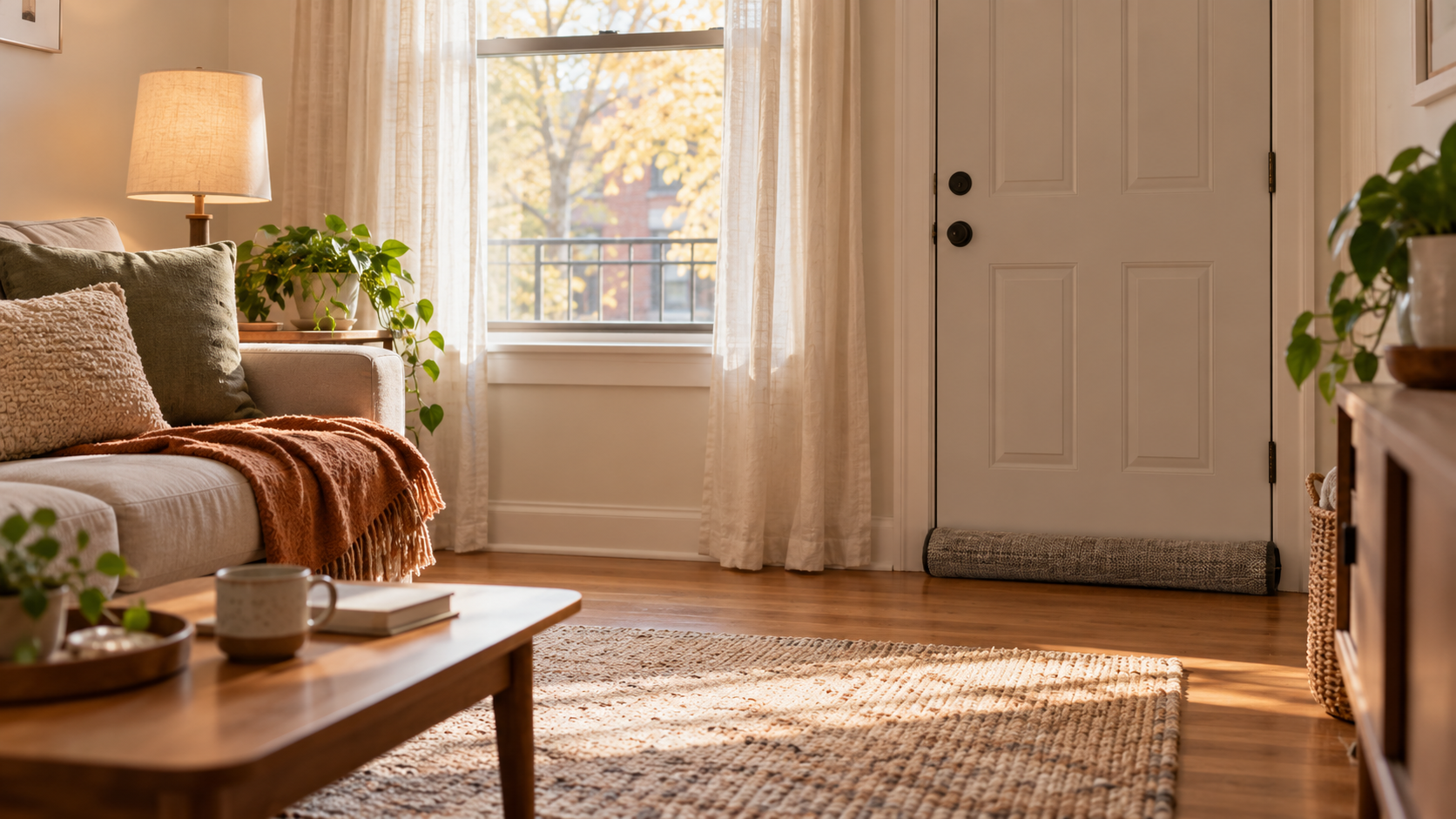
Exterior doors, and even interior doors leading to unheated stairwells or hallways, frequently allow large volumes of air to move freely into your living space. A heavy fabric door draft stopper laid along the threshold requires zero installation and can be moved easily whenever you open or close the door. For gaps around the sides and top of the door frame, adhesive-backed foam or rubber weatherstripping can be cut to length and pressed securely against the door stop. Be sure the weatherstripping is not so thick that it makes closing the door difficult, which can strain latches and hinges.
Layer Window Coverings for Thermal Control
Standard rental window blinds rarely provide enough thermal resistance to keep winter chill out or summer heat from radiating indoors. Layering your window treatments is an effective strategy that requires minimal hardware. If your apartment already has curtain rods installed, you can hang heavy thermal curtains or layered drapes to trap a pocket of air between the fabric and the glass. If you need to install your own hardware, use renter-safe hanging hooks designed for drywall or wood trim, ensuring you do not exceed the stated weight capacity of the brackets. Closing these heavy drapes during the coldest parts of the day or when the sun is not shining directly on the window helps stabilize indoor temperatures.
Manage Airflow and Heating Elements
How you manage your apartment’s existing heating and cooling equipment significantly affects both comfort and energy use. Keep radiators, baseboard heaters, and floor vents completely clear of furniture, rugs, and heavy drapes so that air can circulate freely throughout the rooms. If furniture blocks a vent, heat cannot enter the living space efficiently, forcing your heating system to work harder than necessary. For a foundational overview of low-cost ways to improve efficiency, consult guidance from Energy Star. Additionally, simple behavioral adjustments—such as utilizing ceiling fans on a low, clockwise setting during colder months to gently push rising warm air back down into the living zone—can make a noticeable difference in how warm a room feels without touching the thermostat.
Utilize Textiles to Add Warmth
Hard flooring materials like hardwood, laminate, or tile can feel intensely cold during chilly months, contributing to a drafty sensation even when the air temperature is reasonable. Laying down large area rugs, especially when paired with a thick rug pad underneath, provides a layer of physical insulation against cold subfloors. Similarly, adding soft blankets and heavier throw pillows to seating areas creates micro-climates of warmth, reducing your reliance on space heaters. If you do choose to use a portable electric space heater as a supplementary heat source, always operate it safely by keeping it away from curtains, bedding, and foot traffic, and plug it directly into a wall outlet rather than an extension cord.